
Uncategorized
Early Signs of Canine Heart Disease

Early signs of heart disease in dogs often appear quietly, woven into small daily changes that are easy to dismiss at first. A slower walk around the block, a cough that shows up at night, or unusual fatigue after mild play can signal that the heart struggles to keep up with the body’s needs. Heart…
Read MoreSwimmer Puppy Syndrome

Swimmer puppy syndrome describes a developmental condition in which a young puppy’s legs splay outward, making it difficult or impossible to stand or walk normally. Many pet owners first notice something seems off when a littermate starts moving around while one puppy remains flat on its chest and belly, paddling their limbs like they are…
Read MoreXylitol Poisoning in Dogs

A dog snags a stick of gum off the counter, and within minutes something feels off — that is how xylitol poisoning in dogs often begins. Xylitol is a common sugar substitute found in everyday products, yet dogs process it very differently than people do. What tastes harmless to us can trigger a rapid medical…
Read MoreUnderstanding Canine Vertigo

Vertigo in dogs describes a sudden loss of balance that makes the world seem like it is spinning, tilting, or moving when it is not. One minute your dog walks normally, and the next they stumble, lean, or fall as if the floor shifted under their paws. This condition often relates to the vestibular system,…
Read MoreMastitis in Dogs: A Guide for Pet Parents

Mastitis in dogs can begin subtly, with a nursing mother who seems slightly uncomfortable or a litter that suddenly struggles to feed. Pet parents may notice mild behavior changes before they realize something more serious is happening. Mastitis in dogs is an infection and inflammation of one or more mammary glands, most commonly affecting female…
Read MoreSigns of a Broken Leg in Your Dog

A broken leg in dogs often happens in a split second, yet the signs linger long after the moment passes. One minute your dog runs, jumps, or plays, and the next, they hold up a limb, cry out, or refuse to move. A fracture, or broken bone, in a dog’s leg disrupts normal structure and…
Read MoreEarly Signs of Heart Failure in Cats

Cats are experts at hiding illness, which makes detecting early signs of heart failure in cats especially difficult for pet owners. Unlike dogs, who may show more obvious symptoms, cats often exhibit only subtle changes in behavior or activity levels when something is wrong. Because heart disease in cats can progress silently, it’s important to…
Read MoreHeart Murmur in Dogs

A heart murmur in dogs can be an alarming discovery for pet owners, especially if it is diagnosed during a routine checkup. While the term “heart murmur” might sound serious, it is essential to understand what it means for your dog’s health. Heart murmurs are abnormal sounds heard during a heartbeat and can indicate underlying…
Read MoreHow to Tell if a Cat Has a Fever
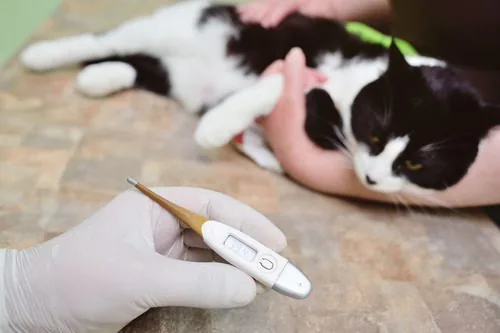
How to Tell if a Cat Has a Fever Cats are experts at hiding signs of illness, which can make it difficult for pet owners to detect when something is wrong. Unlike humans, who often develop visible signs like flushed skin or sweating, cats show fever symptoms in different ways. Knowing what to look for…
Read MoreCat Vomiting: Causes and How to Help

Seeing your cat vomit can be alarming, especially if it happens frequently. Occasional vomiting may not be a cause for concern, but repeated or severe episodes can indicate an underlying health issue. Vomiting in cats can be triggered by minor irritations, such as eating too quickly, or more serious conditions like gastrointestinal diseases, infections, or…
Read More