
Happy Tail Syndrome
Happy tail syndrome is a soft tissue injury caused by repeated, forceful tail trauma. While it may sound minor, it’s one of those conditions that escalates quickly when it isn’t addressed definitively. By the time many dogs arrive at Pinnacle Veterinary Specialists in Glen Mills, PA, they’ve already been through multiple rounds of bandaging, the wound keeps reopening, and the owner is exhausted from managing a mess they can’t seem to fix. Our surgery team at Pinnacle sees happy tail cases regularly, and understands both the frustration owners feel and the clinical reality that some of these injuries require surgical resolution to heal.
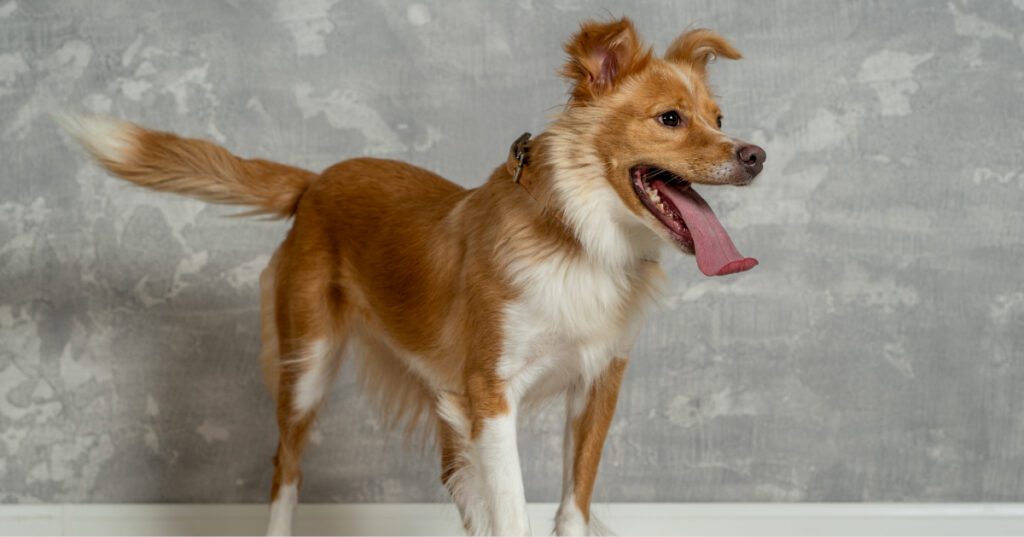
What Is Happy Tail Syndrome in Dogs?
Happy tail syndrome develops when a dog repeatedly strikes the tip of their tail against hard surfaces such as walls, crates, furniture, or floors with enough force to break the skin and traumatize the underlying tissue. Each time the tail wags, the wound is reopened before it has a chance to heal, creating a cycle of injury that becomes self-perpetuating.
The condition starts as a small abrasion or skin crack at the distal tail tip, but progressive trauma causes the wound to enlarge and deepen. In chronic cases, the injury can extend into deeper soft tissue layers and, eventually, involve bone, at which point surgical intervention becomes necessary rather than optional.
Which Dogs Are Most Likely to Develop Happy Tail?
Happy tail syndrome predominantly affects large, muscular, high-energy dogs whose tails generate significant force during wagging and who spend time in environments where the tail contacts hard surfaces repeatedly.
Breeds most commonly affected by happy tail syndrome include:
- Labrador Retrievers and Golden Retrievers
- Great Danes and Great Pyrenees
- Pit Bull Terriers and American Staffordshire Terriers
- Boxers and Doberman Pinschers
- Irish Setters and Pointers
- Weimaraners
Dogs housed in kennels, runs, or crates are at particularly high risk because confined spaces guarantee repeated tail-to-wall contact. This is why happy tail syndrome is frequently seen in shelter dogs, dogs in boarding facilities, and working dogs and why resolution often requires more than bandaging alone.
What Does Happy Tail Look Like?
The classic presentation of happy tail in dogs is a raw, bleeding wound at the tip or distal portion of the tail. Early-stage injuries may appear as a small abrasion or area of fur loss. As the wound progresses with repeated trauma, it becomes larger, deeper, and more irregular with tissue that is raw, friable, and, in chronic cases, necrotic or sclerotic at the wound bed.
Because the tail tip is highly vascular, even a small wound bleeds significantly, and the blood is distributed across a wide area every time the tail moves. Many owners first notice the problem when they find unexplained blood spatter on walls at tail height or across floor surfaces.
Signs of happy tail syndrome in dogs include:
- An open wound, raw skin, or area of missing fur at the tail tip
- Blood on walls, floors, furniture, or the dog’s hindquarters
- A scab or wound that repeatedly reforms and reopens
- Progressive swelling, thickening, or tissue distortion at the tail tip
- Self-trauma including licking, chewing, or rubbing at the tail
- Exposed bone at the tail tip in advanced or neglected cases
Can Happy Tail in Dogs Heal on Its Own?
Mild, early-stage happy tail injuries occasionally resolve with aggressive wound protection and strict activity restriction, but this outcome depends entirely on preventing any further tail trauma, which is extremely difficult to achieve in an active dog. The moment the wound is re-traumatized, healing resets.
Most patients referred to our surgery team at Pinnacle Veterinary Specialists have already cycled through two or more rounds of bandaging without lasting success. Bandages offer temporary protection but become a surface for impact themselves, and chronic wounds develop scar tissue, bacterial colonization, and compromised vascularity that further impairs healing. At that point, medical management is no longer a realistic path to resolution.
How Is Happy Tail Syndrome Treated?
Treatment for happy tail syndrome in dogs follows a progression from conservative management to surgical intervention, with the decision point driven by wound chronicity, depth, and the dog’s response to initial care.
Medical Management
Initial management of a fresh happy tail injury includes thorough wound debridement, appropriate bandaging, and pain control. An Elizabethan collar is essential to prevent self-trauma. Padded tail bandages or commercial tail protectors may reduce impact force temporarily. Antibiotics are indicated when wound infection is present. This approach is reasonable for acute, superficial wounds in dogs whose activity can be meaningfully restricted, but it carries a high failure rate in active dogs, large breeds, and any case where the wound has already cycled through injury and incomplete healing.
Surgical Treatment for Happy Tail
When medical management has failed or the wound involves deep tissue or bone, the surgical treatment for happy tail syndrome is partial tail amputation or a caudectomy. The procedure removes the injured portion of the tail, resects to healthy, well-vascularized tissue, and closes the wound under general anesthesia. The result is a shorter tail with a clean, healed end that no longer makes contact with hard surfaces during wagging.
For many dogs with chronic happy tail, caudectomy is the only intervention that produces a permanent resolution. The surgery is well-tolerated, recovery is typically straightforward, and the shortened tail does not impair the dog’s quality of life or function. Most owners report that their dog is noticeably more comfortable after surgery than they were during the months of chronic wound management that preceded it.
Recovery After Happy Tail Surgery
Post-operative care includes an E-collar to protect the incision site, restricted activity during the initial healing period, and scheduled recheck appointments for suture removal and wound assessment. Our Pinnacle surgery team monitors healing closely and adjusts post-operative instructions based on individual patient progress. Most dogs return to normal activity within two to three weeks following an uncomplicated caudectomy.
When to Bring Your Dog to Pinnacle Veterinary Specialists for Happy Tail
Not every happy tail injury requires a surgical referral from the start, but many cases reach that threshold sooner than owners expect. A consultation with our surgical team at Pinnacle Veterinary Specialists is appropriate when:
- The wound has failed to heal after two or more rounds of bandaging
- The injury involves exposed bone, deep soft tissue, or signs of chronic infection
- The wound keeps reopening despite consistent wound care and activity restriction
- Tissue necrosis or significant scarring has developed at the tail tip
- The dog is in pain and quality of life is being affected by the ongoing wound
Our surgery team at Pinnacle Veterinary Specialists in Glen Mills, PA regularly evaluates and treats dogs with happy tail syndrome, from initial surgical consultation through post-operative recovery. If your dog’s tail wound has become a recurring problem, a surgical evaluation is the right next step. Call Pinnacle Veterinary Specialists to schedule a consultation at (610) 477-8797 today.
About Us
Pinnacle Veterinary Specialists is a specialty and 24/7 emergency veterinary practice delivering cutting-edge medicine with a warm, personalized touch. We partner with your primary care vet to ensure the best treatment for your pet, and a seamless experience for you. When advanced and/or specialized veterinary services are required, our highly capable team stands ready to support you. Call (610) 477-8797 if your pet is having a medical problem or emergency.